









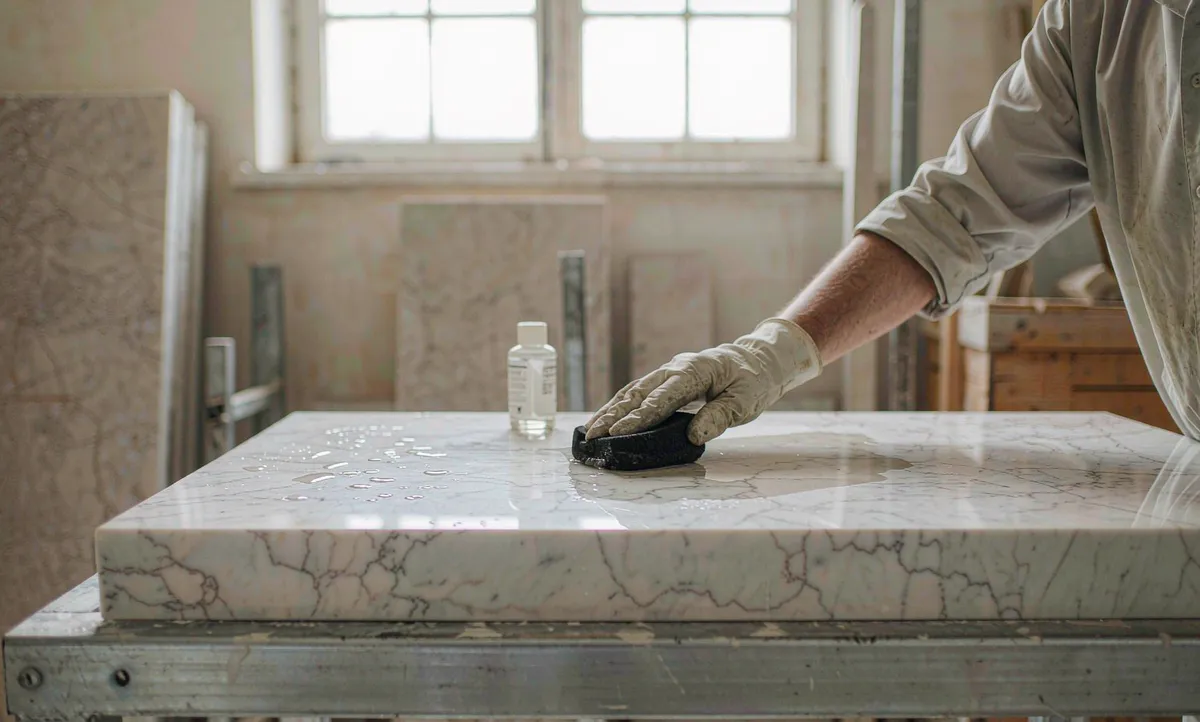
Natural stone gets better with age — but only when the right protection is specified. Most "stone problems" on hospitality and residential projects are absorption problems, not defects in the block: olive oil on a limestone vanity, red wine on a honed marble bar top, de-icing salt across a hotel entry. Sealing does not make stone stain-proof, and no sealer turns a porous material into a non-porous one. A correctly chosen sealer slows the rate at which liquids penetrate, which buys time to clean up.
Every dimension stone contains microscopic voids: inter-crystalline pores in granite and quartzite, veins and fissures in marble, and the natural cavities that give travertine its character. Those voids are also the pathways liquids follow into the slab.
Start with water absorption, tested under ASTM C97/C97M, the standard test method for absorption and bulk specific gravity of dimension stone. Dense stones such as granite and quartzite commonly report absorption well under 1% by mass, while limestones and many travertines report several times that. Treat published ranges as indicative only: what matters is the mill's test report for the specific block, because absorption varies between quarries and even between benches of one quarry.
A second factor is mineral sensitivity rather than porosity. Marble and onyx are not especially porous, but they are calcium-based and therefore acid-sensitive: lemon juice, wine, vinegar, and many bathroom cleaners etch the surface whether or not it has been sealed. Sealing reduces staining; it does not prevent etching on marble or onyx.
Based on silane, siloxane, or fluoropolymer chemistry carried in solvent or water, these products penetrate the pores and react below the surface, leaving appearance and texture almost unchanged. Because they sit inside the stone, they do not peel, scratch off, or yellow, and the stone still breathes. This is the default choice for floors, walls, exteriors, and any surface where appearance and wear resistance both matter.
Topical products — acrylics, polyurethanes, waxes, and film-forming blends — build a continuous layer on the surface. They give the strongest short-term barrier and can deepen colour, which suits low-traffic decorative work. The trade-offs are real: a film can scratch, blister under moisture vapour, and wear through along traffic paths, then require stripping before re-coating. On commercial floors and in wet areas, film-forming coatings demand a disciplined maintenance programme rather than a one-off application.
Enhancing sealers combine penetration with a wet-look effect, which suits honed, brushed, and tumbled finishes where the client wants the depth of a polished slab without the gloss. Approve them on a full trial area, because intensity varies with absorption and coat count.
The table below is a screening tool, not a specification. Confirm every decision with a test report for the specific block and finish.
| Stone type | Typical absorption (ASTM C97, indicative) | Sealing recommended | Re-application in high-traffic areas |
|---|---|---|---|
| Engineered quartz | Effectively non-absorbent | No sealer required | Not applicable |
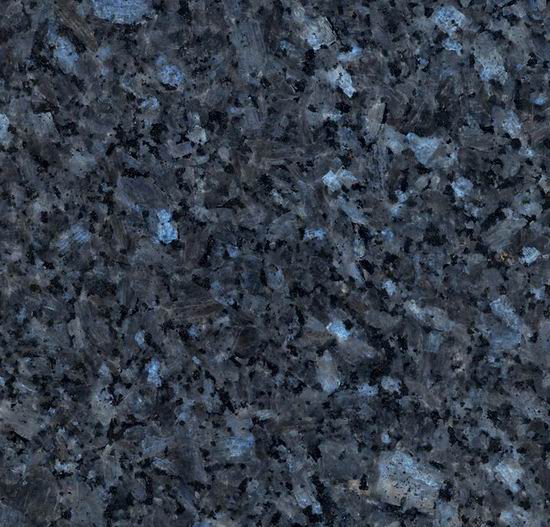
| Granite | Commonly under 1% | Optional; advised for kitchens and vanities | 3-5 years |
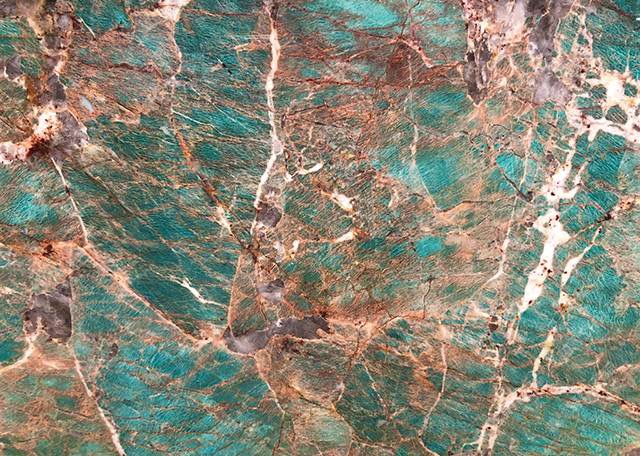
| Quartzite | Commonly under 1% | Recommended | 2-4 years |
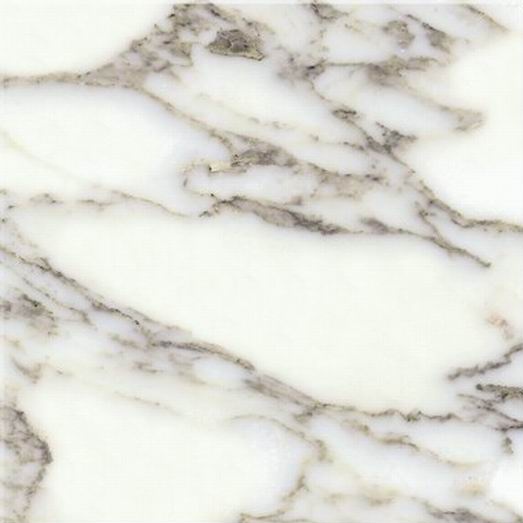
| Marble | Low absorption, acid-sensitive | Recommended for stain resistance; etching still possible | 1-3 years |
| Travertine | Variable, often 1-3% (filled or unfilled) | Strongly recommended | 1-2 years |
| Limestone | Variable, often 1-4% | Strongly recommended | 1-2 years |
| Onyx | Low absorption, highly acid-sensitive | Recommended, with careful product selection | 1-2 years |
| Slate (natural cleft) | Low to moderate | Recommended; product matched to cleft finishes | 2-3 years |
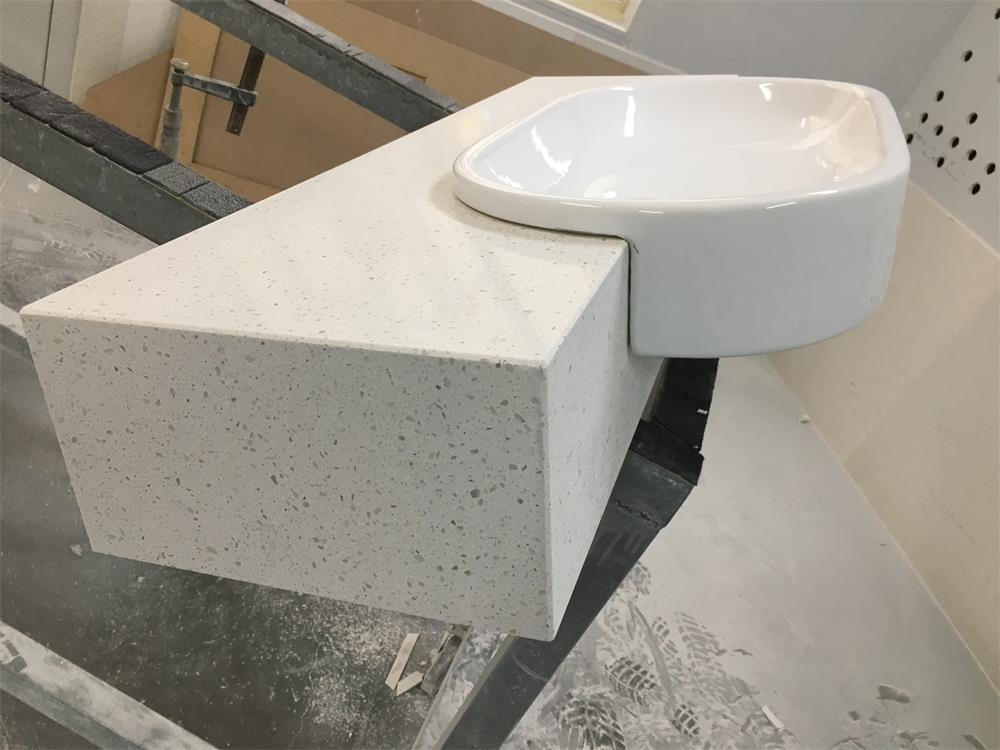
Engineered quartz is manufactured as a non-porous composite and does not require sealing; film-forming products can leave haze and uneven sheen on polished surfaces.
| Criterion | Impregnating sealer | Topical sealer / coating | Enhancing sealer |
|---|---|---|---|
| Where it sits | Inside the pores | Continuous film on the surface | Inside the pores, with a wet-look effect |
| Appearance change | Minimal | May add gloss or sheen | Deepens colour and tone |
| Breathability | Unaffected | Reduced | Unaffected |
| Wear behaviour | Wears with the stone | Can scratch, peel, or wear through | Wears with the stone |
| Best use | Floors, walls, exteriors, wet areas | Low-traffic decorative surfaces | Honed, brushed, tumbled finishes |
| Removal | Not required; re-apply over | Stripping required before re-coating | Not required |
| Maintenance effort | Low | High | Low to moderate |
Worktops see oil, wine, citrus, and cleaning chemicals. Specify an impregnating sealer for marble, quartzite, granite, and travertine. Cut edges and sink cut-outs are the most absorbent part of any top, so require that edges are sealed after fabrication, not only the face.
Floors take the most punishment and are the hardest surface to re-treat once a building is occupied. Here sealing is normally paired with a maintenance regime: dust mopping, pH-neutral cleaning, and re-application on a schedule rather than on a complaint. Where a floor has both polished and honed zones, expect the honed areas to absorb more and need attention first.
Shower floors, pool copings, and external paving combine water, salt, and ultraviolet exposure. Use impregnating products designed for exterior use, and never seal a wet surface — trapped moisture must escape somewhere. In freeze-thaw climates, avoid film-forming coatings.
The surface must be clean, dry, and free of residues from polishing compounds or cleaning agents. On new slabs, cure time after resin treatment matters as much as the sealer choice, so follow the product data sheet rather than a rule of thumb.
Apply to a representative off-cut and evaluate colour change, gloss, and dry time before treating the whole project — especially on enhancing products and stones with variable veining, where uneven take-up is more visible than the stain you were preventing.
Sealing is a cycle, not an event. The practical test: place a few drops of water on an inconspicuous area — if the surface darkens and the water stops beading, renewal is due. In busy hotels the interval on floors and vanities is often shorter than the residential schedule. Record date, product, and area at each application so the next renewal is predictable.
For counters used in food preparation, choose products suited to food-contact areas; NSF/ANSI 51 is the reference standard for food equipment materials, and manufacturers list which products are covered. For interior work, check the regional volatile organic compound rules for solvent-based sealers, since limits differ between markets. ANSI/NSC 373 is the sustainability framework for natural dimension stone production.
Sealing is also not a substitute for silica controls. Cutting, grinding, and polishing stone generate respirable crystalline silica, and the control is wet cutting with on-tool extraction and respiratory protection. Suppliers working to ISO 9001 quality systems should document both their silica controls and their sealer specifications.
Factory application gives consistent coverage and lets the slab cure before crating. Site application gives the fabricator control over the final finish and over cut edges. Many export projects use both: a factory impregnation to protect the slab in transit, plus a site application after installation. Make the split explicit in the purchase order so neither party assumes the other is doing it.
Does sealing make natural stone stain-proof? No. Sealing slows absorption and extends the time available to wipe up a spill, but it does not stop staining altogether and does nothing to prevent acid etching on calcium-based stones such as marble and onyx.
Do engineered quartz countertops need sealing? Generally not. Engineered quartz is non-porous by design, and film-forming sealers can leave haze on polished surfaces. Follow the manufacturer's care instructions instead.
How often should stone be re-sealed? It depends on traffic, stone type, and product. High-traffic hotel floors and vanities may need renewal every 1-3 years, while low-traffic residential walls go far longer. Test with a few drops of water and renew when the surface no longer beads.
Can I seal a stone floor that is already installed and in use? Yes, provided the floor is thoroughly cleaned and fully dry. Trapped moisture and cleaning residues are the main causes of patchy results, so plan the work during a low-occupancy period.
Does sealing change the colour of stone? Impregnating sealers are designed to be appearance-neutral; enhancing sealers deliberately deepen colour. Always approve the effect on a full trial area, because the result varies with absorption and coat count.
Which stone is hardest to keep looking new? Marble and onyx, because their appearance is governed by acid sensitivity rather than porosity alone, and limestone and travertine because they need the most frequent re-application.
Sealer performance is only half the story: absorption varies by quarry, bench, and finish, so the test data that accompanies the slab matters as much as the sealer brand. YDL Stone supplies engineered quartz, granite, marble, quartzite, and travertine blocks and slabs for hotel and residential projects, with block-level test documentation, controlled finishing, slab-by-slab inspection, and export crating built for long sea freight. If you are specifying surfaces for an upcoming project and want guidance on which stone and finish combination will hold up in service, send us your drawing set or specification and our team will review it with you.