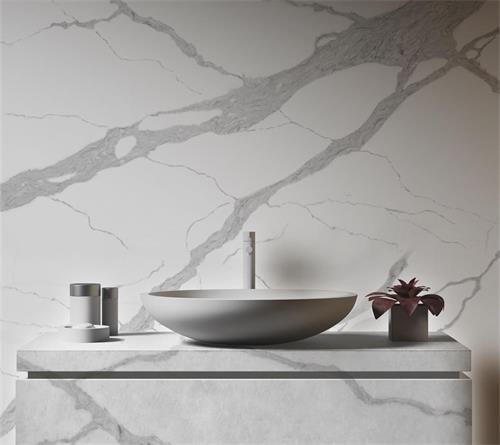










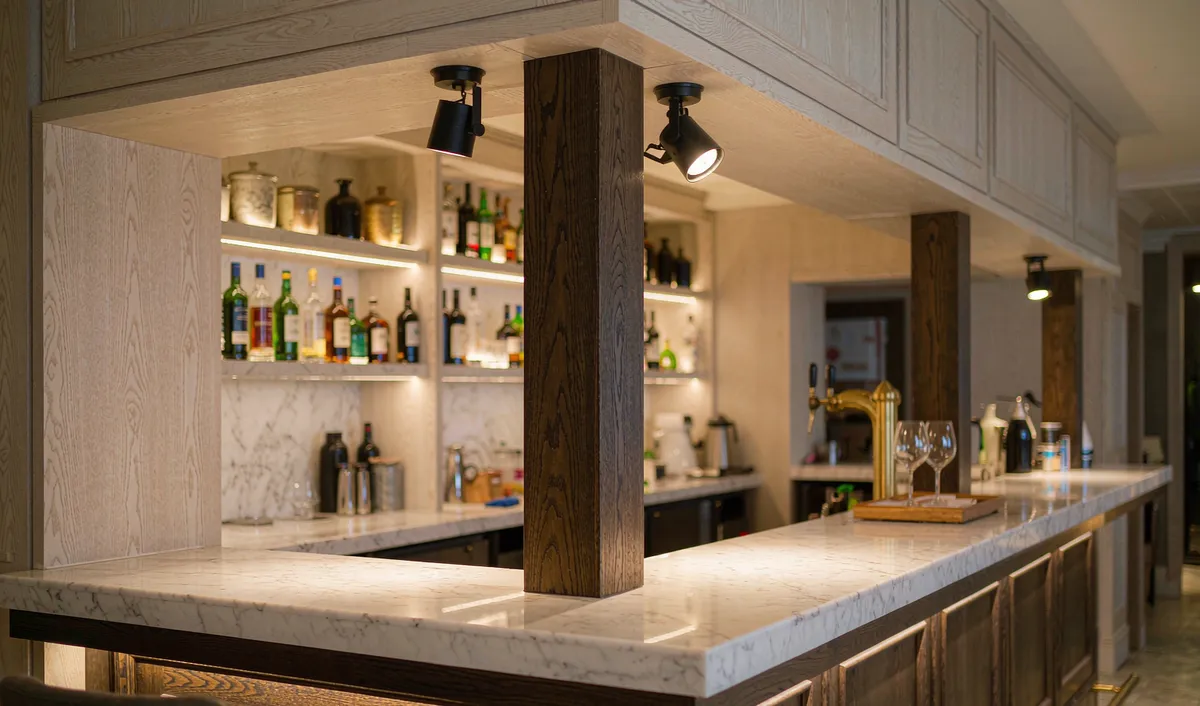
A bar top is the hardest-working stone surface in a hospitality project. It sees spilled wine and citrus, hot pans lifted straight off a pass, glasswasher steam, and a decade of nightly cleaning. It is also the surface guests touch most, so every seam, dull patch, and ring stain is on show. Yet bar tops are usually specified late, from a finishes schedule, with the same slab language used for a lobby floor — and that is where most failures begin.
This guide covers what determines whether a stone bar top survives service: acid and heat behaviour by stone type, the structure behind the overhang, the fabrication choices that decide hygiene and repairability, and the checks to write into a purchase order before the container leaves the factory.
Wine, citrus garnish, vinegar-based syrups, and many commercial descalers are acidic. On calcium-based stones — marble, limestone, travertine, and onyx — acid attacks the surface directly and leaves a dull etch mark that no sealer will prevent. Sealing slows staining; it cannot stop etching. If a client wants a marble bar top, the practical answer is a honed or leathered finish, which hides etches far better than polish.
Silicate-based stones behave differently. Granite and quartzite are generally acid-resistant because their minerals are not calcium carbonate, though some granite varieties carry calcite veins that can still etch. Engineered quartz is a resin-bound composite and resists most food acids well, but strong solvents and some aggressive cleaners can attack the binder.
Engineered quartz is the material most often mis-sold for bar duty. Its resin matrix is the limiting factor: sustained contact with a hot pan, a coffee urn base, or a glasswasher door can scorch, discolour, or craze the surface. Natural stone tolerates heat far better as a material, but thermal shock — a hot pan on a cold slab, or near a seam — can open existing fissures. The safe specification is simple: no stone bar top is a trivet. Provide landing areas, heat mats, and a stainless pass shelf where the kitchen actually puts hot equipment.
Bar tops take concentrated point loads at the tap, the glasswasher, and the service well, plus constant wiping with whatever the cleaning contractor stocks. Specify a neutral pH cleaner in the handover documentation and list prohibited products by name — this single line prevents the most common call-back on stone bars.
The table below is a screening tool for early design decisions. Confirm every selection with the mill's test report for the specific block and finish.
| Stone type | Acid resistance | Heat resistance | Typical bar use | Watch out for |
|---|---|---|---|---|
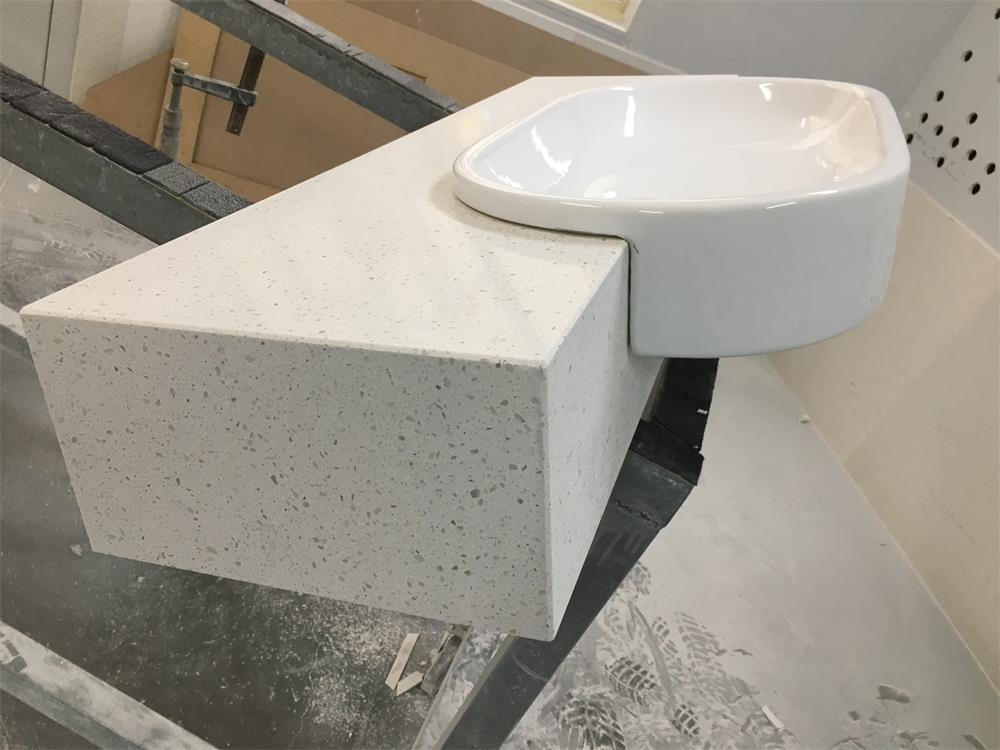
| Engineered quartz | Good (resin-bound) | Limited by resin binder | Hotel lobby bars, guest room wet bars | Scorching, seams visible on uniform colours |
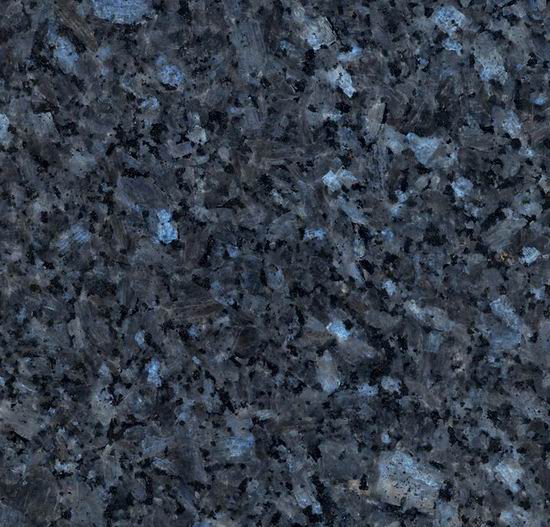
| Granite | Good to excellent | Excellent | High-volume restaurant bars | Some varieties with calcite veins can etch |
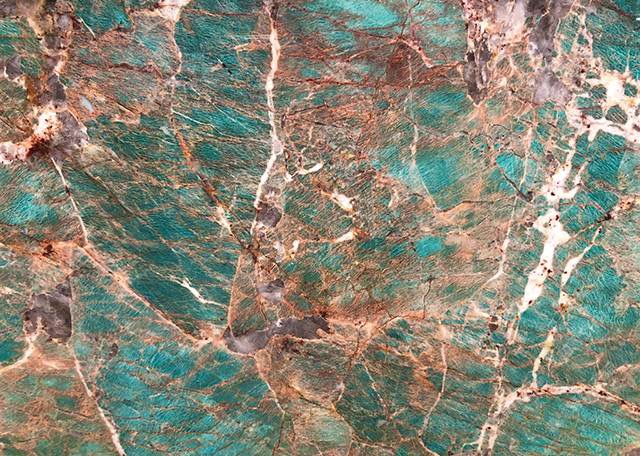
| Quartzite | Good | Excellent | Feature bars, back bars | Hard and abrasive to tooling; verify fissures |
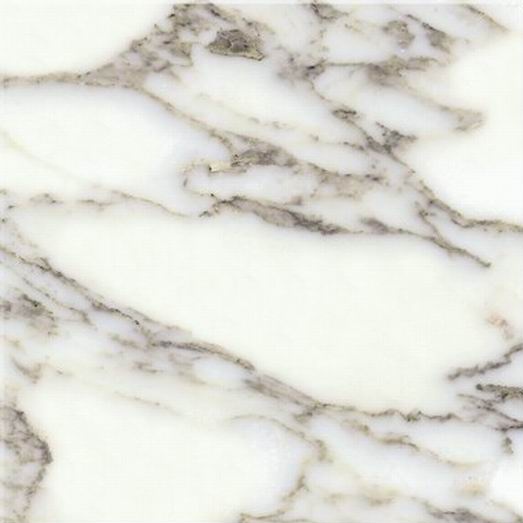
| Marble | Poor (etches) | Good | Low-acid cocktail bars, honed finishes | Etching from citrus; needs honed surface |
| Limestone | Poor (etches) | Good | Rustic or boutique interiors | Absorption; requires sealing and honed finish |
| Travertine | Poor (etches) | Good | Resort and outdoor-adjacent bars | Filled voids, absorption, acid sensitivity |
| Onyx | Very poor (etches) | Moderate | Back-lit feature bars only | Fragile; backlighting needs substrate design |
The bar top overhang is where hospitality projects get into trouble, because it is drawn by an interior designer and built by a fabricator working from a different set of assumptions. Guests lean on that edge; trolleys hit it; and in a wet bar the substrate may be a timber frame rather than masonry.
Unsupported overhang capacity depends on stone type, thickness, the substrate, and how the slab is fixed — not on one universal number. As a working rule, most fabricators accept roughly 250–300 mm of unsupported overhang on 20 mm material for a bar counter, and require steel angle, corbels, or a built-up edge beyond that. Deep drinking ledges, curved ends, and island bars should be engineered rather than assumed: ask the fabricator for a detail, not an opinion.
A bar top is not a shelf. Loads transfer through the slab to the substrate, so the critical items are continuous bearing along the cabinet line, correct adhesive coverage, and mechanical restraint at walls and returns. Flexural strength data for the selected stone, measured under ASTM C880, gives the design team a defensible basis for thicker sections or intermediate supports on long runs.
Long hotel bars are almost always fabricated in segments, because a 4 m slab cannot be hand-carried through a service corridor. Segmenting is not a compromise — it is how you get service access to beer lines, glasswashers, and drainage. Set the seams on a grid aligned to cabinet modules, away from the tap and the glasswasher, and specify that adjacent segments come from the same block.
Every drilled hole is a stress riser. Keep penetrations clear of seams and away from edges where the layout allows, core rather than hammer-drill, and seal the cut faces so water cannot track into the substrate. On marble and limestone, chase and polish the cut edges so the penetration does not become the one place that etches.
A square-polished edge looks precise but chips at the arris. A small top radius or a 2–3 mm eased edge survives trolley impacts far better and is more comfortable for guests. For high-volume venues, a laminated 40 mm build-up reads as a thicker top and gives the edge more material to absorb knocks.
For bars handling open food — garnish prep, pastry, direct food contact — the material question changes. NSF/ANSI 51 is the reference standard for food equipment materials; if the surface is inside a food zone, ask the supplier for the specific NSF listing rather than assuming that "quartz is food safe" covers the requirement. In wet zones, minimise joints, specify a coved or sealed junction at the wall, and avoid unsealed natural-cleft surfaces where residue can collect.
Bar tops are inspected dry, on a flat bench, under raking light — the same conditions the client will see them in. Check the face for fissures that open under load, verify that book-matched or vein-matched segments align at the seam, and confirm that drilled holes sit within tolerance. A chip found at the factory is a five-minute repair; the same chip found on site is a flight and a delay.
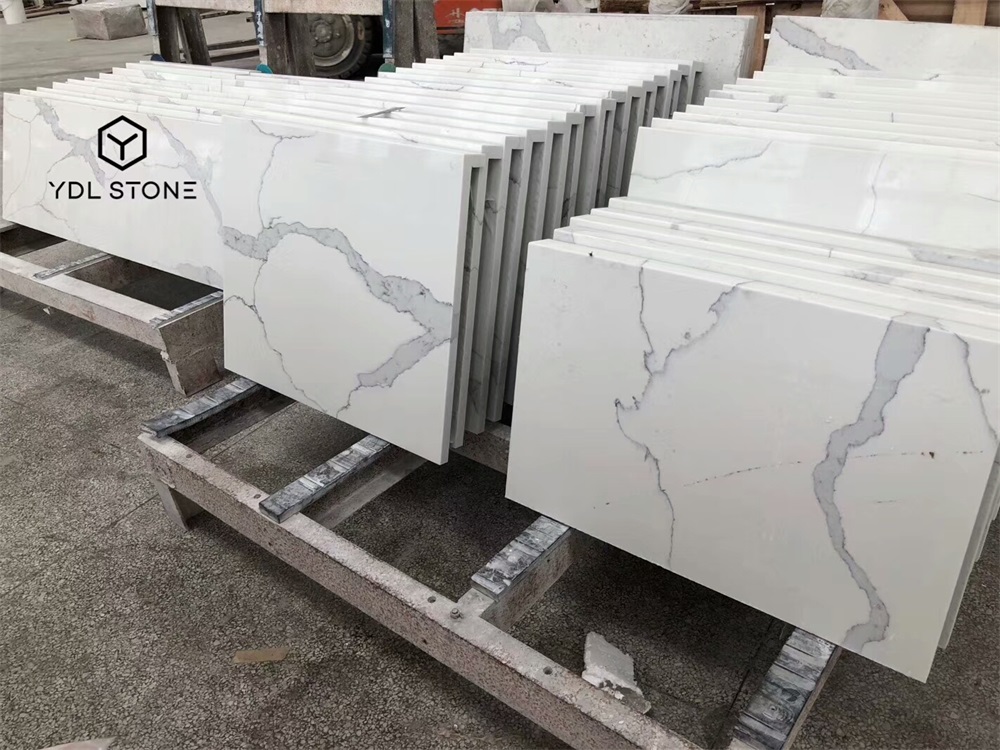
Cut-to-size bar tops travel in timber A-frames with the polished face protected and edges supported, never stacked face-to-face without interleaving. Where a bar is split across a container, label each crate against the seam drawing so the site team installs the right segment in the right place — routine work for an experienced exporter, and a frequent source of trouble when treated as an afterthought.
Hand the operator a one-page schedule instead of a verbal briefing. Re-seal natural stone on a defined interval — shorter in wet zones, longer on sealed quartzite and granite. Clean daily with neutral pH products, wipe wine and citrus immediately, and never leave acidic descalers on a marble or limestone top. Train bar staff on what not to put on the stone; a laminated card behind the bar prevents more damage than any sealer.
Is quartz suitable for a hotel bar top? Yes for lobby bars, guest-room wet bars, and low-heat service, provided the operator keeps hot pans and urns off the surface. Quartz resists staining and acid well, but its resin binder limits heat tolerance.
Will sealing stop marble from etching? No. Sealing reduces stain absorption. Etching on marble, limestone, travertine, and onyx is a chemical reaction with acid and will still occur; a honed finish makes etches far less visible.
How much overhang can stone support without brackets? There is no universal figure. Roughly 250–300 mm unsupported on 20 mm material is a common fabricator working range, with steel or corbels required beyond it. Get the detail engineered for your stone and substrate.
Should the bar top be 20 mm or 30 mm? 20 mm with a laminated 40 mm edge is the usual hospitality detail: lighter, easier to handle, and thick-looking at the edge. 30 mm suits long unsupported spans and feature bars.
How do we keep forty bar tops consistent across a hotel? Fix the block at the start, reserve the quantity, and cut every segment from that reserve. Consistency across a property is a procurement decision, not a fabrication one.
YDL Stone supplies and fabricates quartz, granite, marble, quartzite, travertine, and onyx for hotel and restaurant projects — from block selection and dry-lay approval through cut-to-size fabrication, edge detailing, sealing, and export crating. Send us your layout, finish intent, and service conditions, and we will come back with a material recommendation, a seam plan, and test reports for the specific block before anything is cut.
Contact the YDL Stone team to discuss your project's bar tops, vanity tops, and feature stone.