









A hotel bathroom is the most heavily serviced wet room in the building. A guest-room vanity may be cleaned twice daily, splashed with hair dye and sunscreen, and used as a rest for hot styling irons — all in the first month of opening. Materials that shine in a residential bathroom can look tired within a season under hotel use.
For buyers procuring stone for hospitality projects, this guide explains how to specify quartz tops and natural stone surrounds that still look new at the five-year inspection.
Three forces separate a hotel vanity from a domestic one:
Start with abuse tolerance and cleanability, then looks.
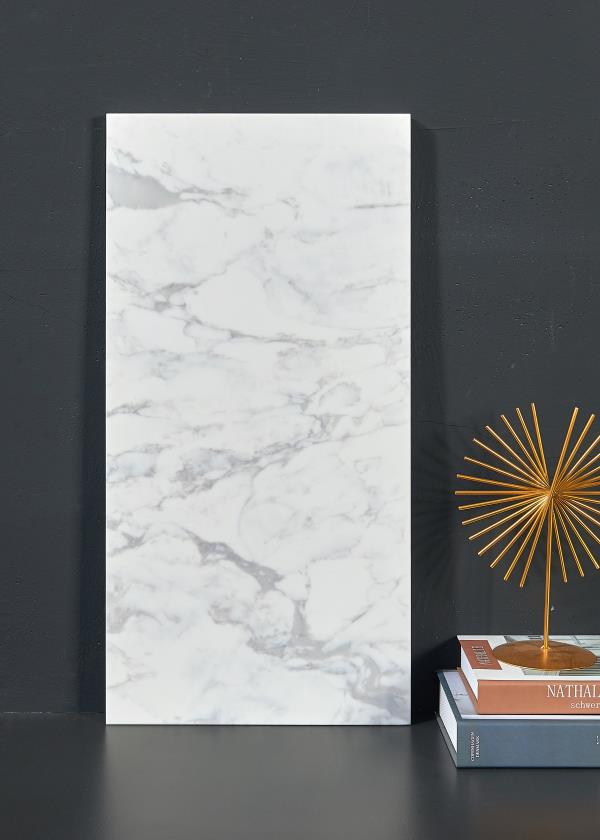
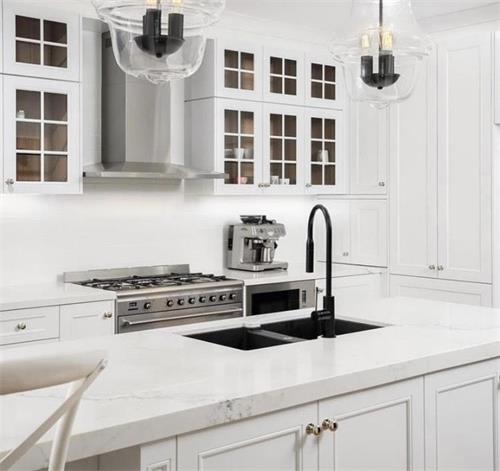
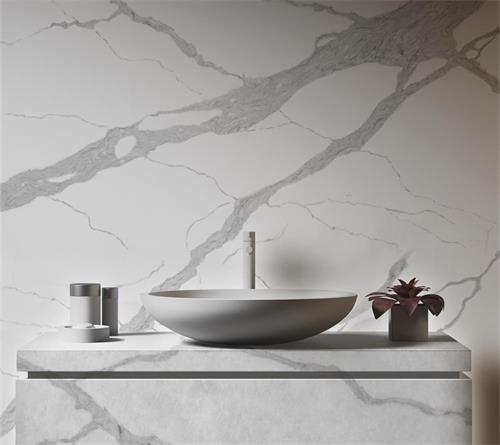
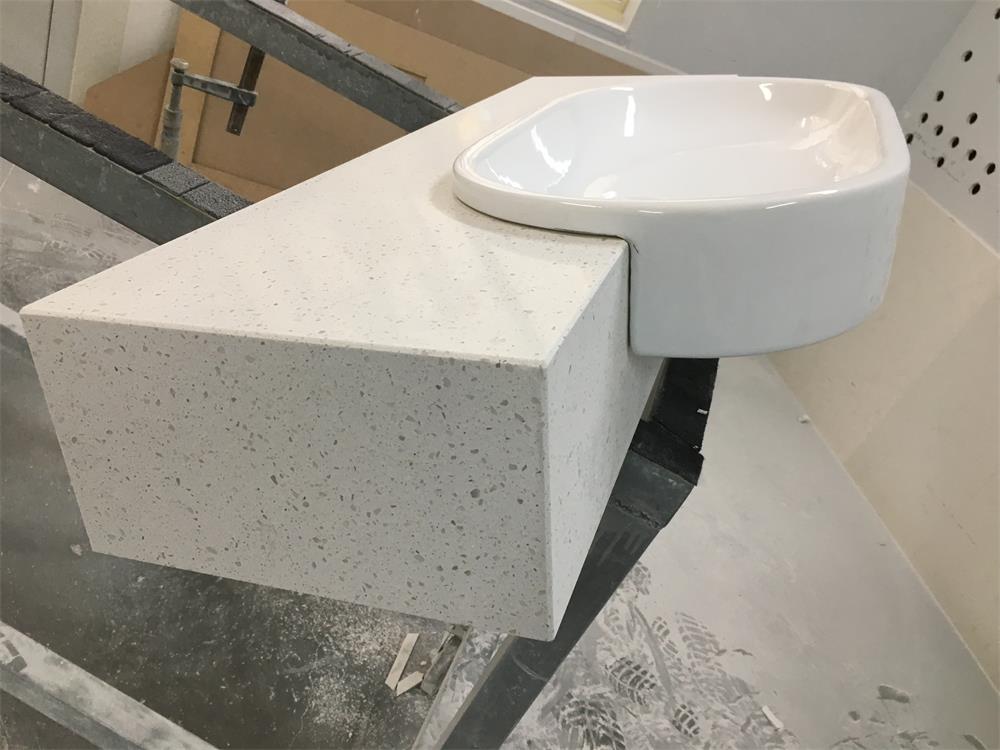
Quartz is the default hotel vanity top. The resin-bound slab is non-porous, so it needs no sealing and shrugs off most cosmetics, coffee, and cleaning chemicals. Batch consistency matters on a 300-room project: tops for rooms 401 and 812 must look identical, which engineered quartz guarantees and natural stone cannot.
The vulnerabilities are heat and harsh chemistry: resin can scorch under a hot styling iron, and solvents such as nail polish remover or undiluted bleach left to dwell can dull the surface. Both are managed with housekeeping rules, not by changing the material.
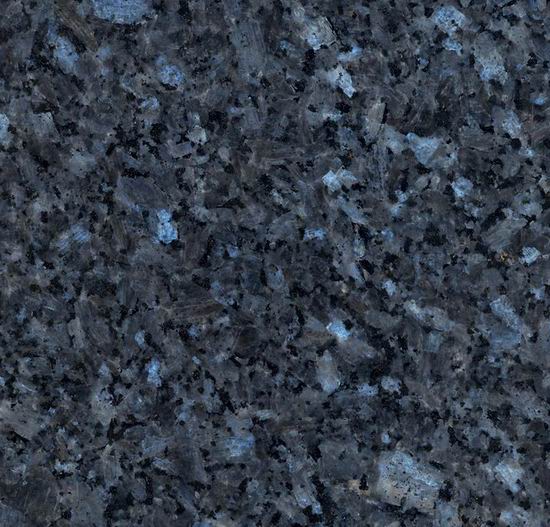
Granite suits resort projects and high-abuse installations. As a silicate stone it is unaffected by acids and tolerates heat far better than quartz, and dark fine-grained varieties hide wear well in busy public washrooms. The trade-off: periodic sealing, and more porous types can darken around basins where water sits.
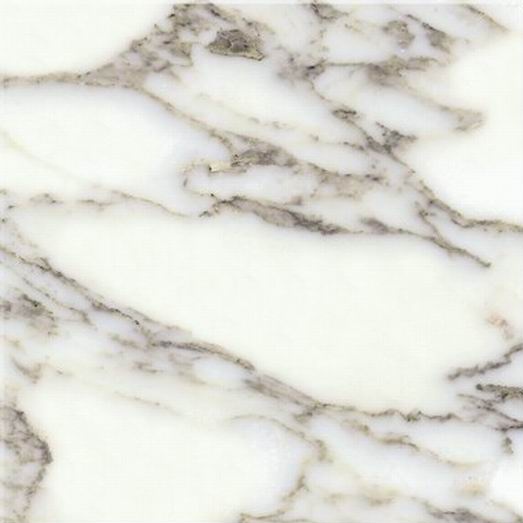
Calcite stones bring the warm look that defines many resort brands and remain popular for vanity tops in low-abuse suites. The chemistry must be acknowledged: marble and travertine etch on contact with acids, from orange juice to descaling cleaner. In hotel service etch marks are a maintenance reality, managed with honed finishes, sealing, and staff training. Travertine adds a second variable: natural pits must be filled, with fill quality checked before shipment.
Porcelain slabs are increasingly specified for integrated-basin vanities and thin-profile tops: non-porous, chemical-proof, and heat-proof, but demanding experienced fabricators — cutouts and mitred corners in 6–12 mm porcelain are where site failures happen. They remain a strong option for walls and surrounds even when the top stays quartz.
| Material | Stain resistance | Heat tolerance | Acid etch risk | Consistency | Best fit |
|---|---|---|---|---|---|
| Engineered quartz | Excellent (non-porous) | Moderate | None | High | High-turnover guest bathrooms |
| Granite | Very good | Excellent | None | Moderate | Resorts, public washrooms |
| Marble | Fair | Moderate | High | Low–moderate | Luxury suites, low-abuse rooms |
| Travertine | Fair (fill quality matters) | Moderate | High | Low | Resort walls, floors, surrounds |
| Porcelain (large format) | Excellent | Excellent | None | High | Walls, integrated basins |
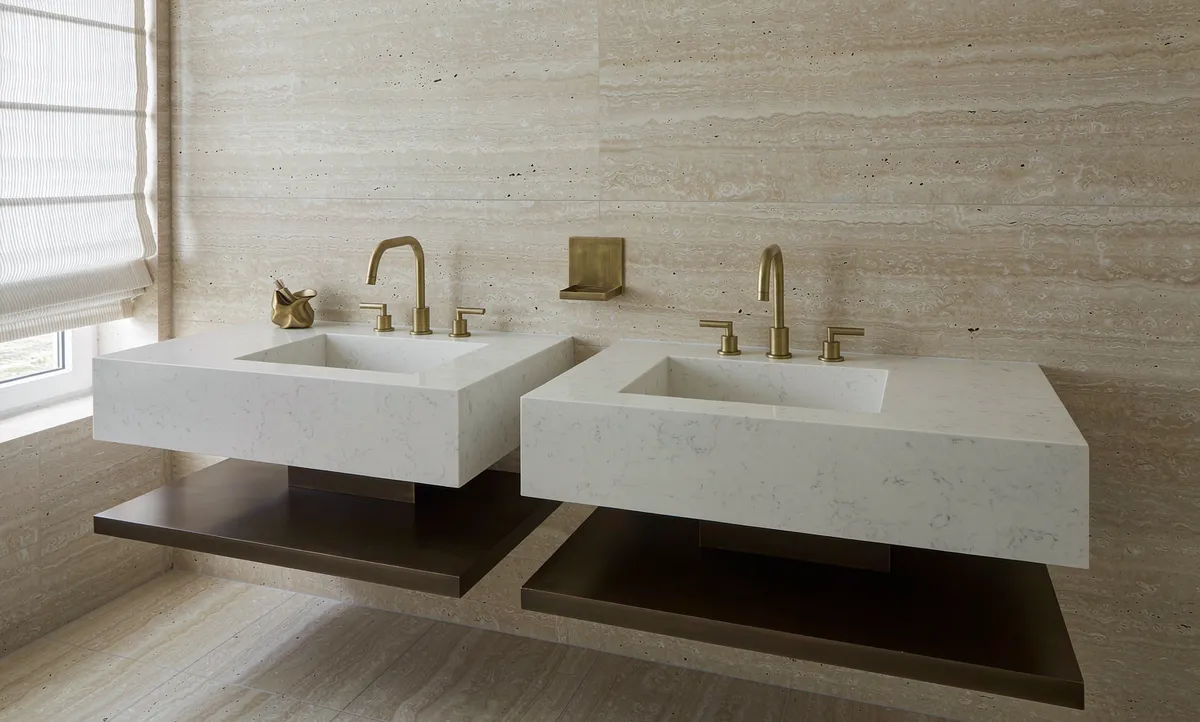
Quartz usually wins the vanity top; the surrounding walls and floors are where natural stone defines the guest experience. Full-height slab walls in honed travertine or marble read as calm and continuous, with a fraction of the grout lines of tile — a genuine hygiene benefit, since grout is where bathroom soil accumulates.
Most vanity problems reported at handover are fabrication-detail problems, not material problems:
Quartz tops need no sealing, but natural stone in the same bathroom does. A practical hotel regime:
1. Seal all natural stone after installation with a penetrating sealer, and re-seal on a schedule set by absorption and usage — commonly every 12 to 24 months for vanities, more often for wet floors. 2. Train housekeeping to wipe cosmetic spills promptly and never let acidic or solvent-based products sit on any surface overnight. 3. Keep acid-based descaling sprays away from calcite stone and polished surfaces. 4. Refresh silicone joints around basins annually — failed silicone, not the stone, is the usual culprit behind water-stained cabinets.
For engineered quartz the regime is simpler: pH-neutral cleaner, soft cloth, and rules about heat. A non-porous surface is inherently easy to keep hygienic in high-turnover bathrooms, which is why hospitality brands keep specifying it.
For an export order, inspection happens at the factory. A workable QC gate:
1. Fix the vanity top material per room class (standard rooms, suites, public washrooms) before releasing drawings. 2. Freeze basin models and tap geometry before cutting any cutout. 3. Specify the finish (polished, honed, leathered) in writing for every surface. 4. Require slip-resistance data for wet-area floor stone and absorption data for natural stone in wet zones. 5. Agree the sealer and maintenance schedule with the operator's housekeeping team, not just the contractor. 6. Approve a physical control sample set and reference it at final inspection. 7. Require room-number labelling and per-crate packing lists for export shipments.
Is quartz suitable for hotel vanity tops? Yes — it is the most common choice for guest-room vanities: non-porous, no sealing, consistent across large orders. Housekeeping must manage heat from styling tools and avoid leaving aggressive solvents to dwell on the surface.
Can travertine be used in hotel bathrooms? Widely, and it defines the resort look for walls and floors. Use honed, well-filled travertine, seal it on schedule, and keep acidic descalers away. For vanity tops it suits lower-abuse suites, since it etches like all calcite stones.
What thickness should a hotel vanity top be? 20 mm is the standard working thickness, usually with a mitred edge build-up to read as 40–60 mm. Heavier-use installations sometimes step up to 30 mm. The build-up detail matters more than raw thickness.
How do you prevent staining around the basin? On quartz, prompt wiping and correct cleaning products are enough. On natural stone, combine a penetrating sealer with an agreed re-sealing interval, and maintain the silicone joint at the basin cutout — most basin "stains" start as failed joint sealant.
Can vanity tops be supplied with basin and tap cutouts included? Yes — factory CNC cutouts with radiused corners are far stronger than site-cut openings. The condition is a frozen basin datasheet: lock the basin model before production.
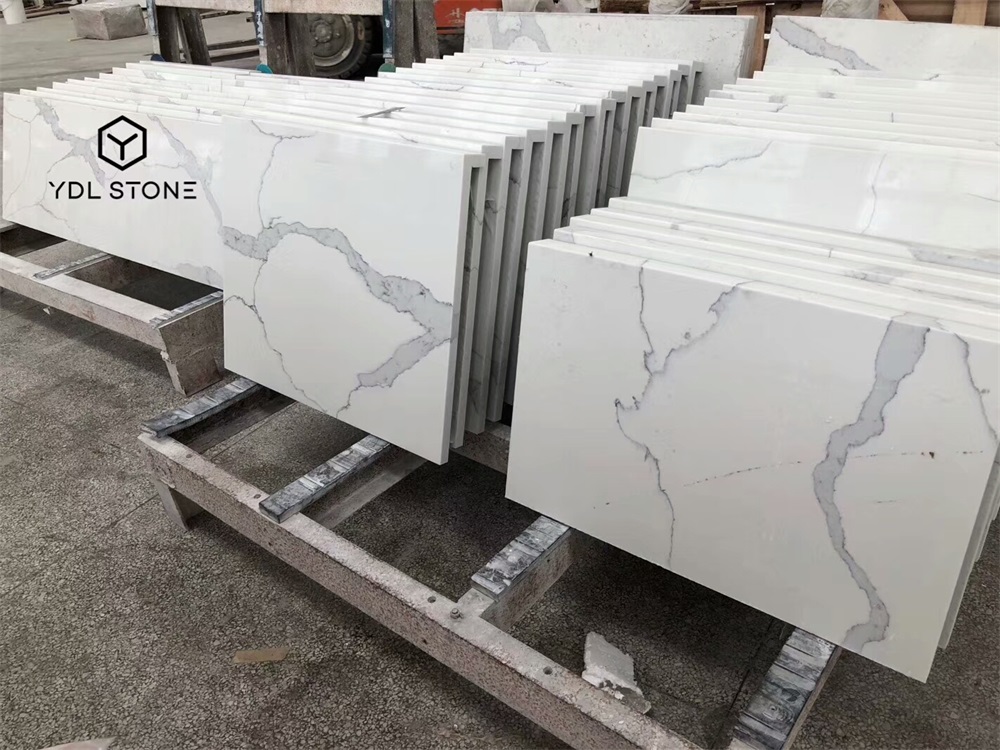
How is hotel bathroom stone packed for export? Tops and slab walls travel face-to-face in A-frames or timber crates with foam interleaving; cut-to-size pieces are labelled by floor and room. Per-crate packing lists let the site team stage rooms in order without opening everything at once.
YDL Stone supplies engineered quartz, granite, marble, quartzite, and travertine in blocks, slabs, and cut-to-size pieces for hotel and residential projects. Vanity tops are fabricated to approved shop drawings with factory cutouts and edge build-ups, walls are vein-matched from approved elevations, and export orders ship with room-level labelling, control-sample references, and inspection reports.
Send your hotel drawings, room schedules, and BOQs to our project team for a material recommendation, sample set, and quotation.