

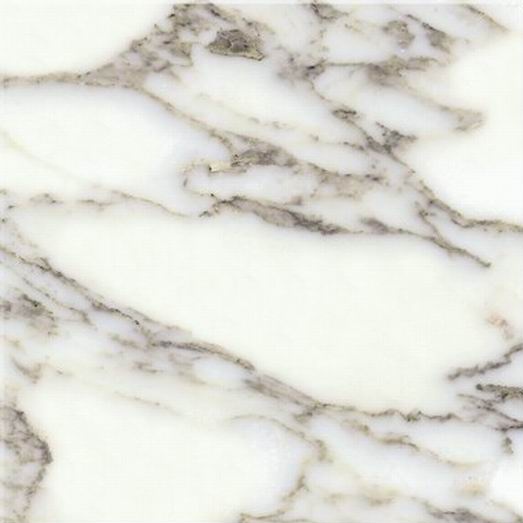
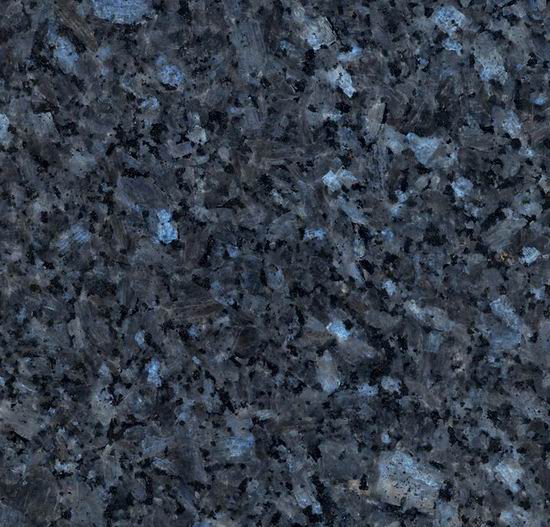
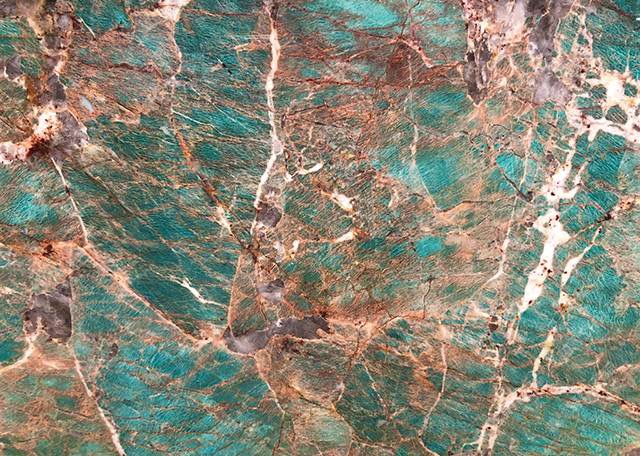









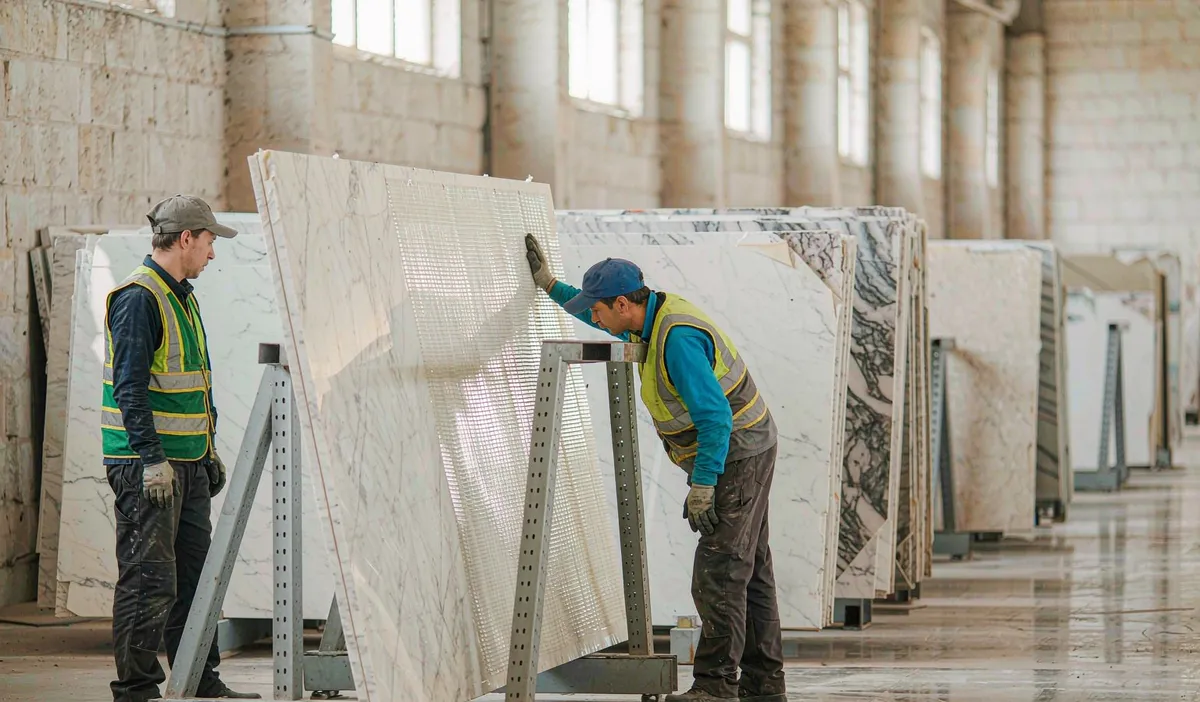
Open a container of marble, onyx, or heavily veined quartzite and there is a good chance you will find a fiberglass mesh bonded to the back of every slab. Buyers react in one of two ways: as reassurance that the supplier is careful, or as a warning that the stone must be fragile. Neither reading is complete. Backing is a process decision, not a grade, and the only way to judge it is to know what was applied, why, and what it means for the way the slab behaves on a saw table and on a wall.
This guide covers the four reinforcement types found on export slabs, what each does to performance, how backing changes fabrication and installation, and what to check at the factory before the container is sealed.
A slab carries more mechanical stress between quarry and building site than it will ever carry in service. It is sawn, resin-lined, polished, tipped onto an A-frame, clamped, trucked, stacked in a container, and lifted again on arrival — each step loading it in ways the finished installation never will.
Meshing and resin exist primarily to survive that journey. They bridge the micro-cracks left by gang saws and diamond wires, distribute point loads from clamps and forklift tines, and hold a slab together when it is moved by hand. On genuinely fragile material — onyx, heavily fractured exotic quartzite, thinly cut marble — backing is often the difference between material that arrives intact and material that arrives as two half-slabs.
That inverts a common assumption: reinforcement compensates for handling and processing stress, not for design loads. A meshed slab is not stronger in the finished wall than an unmeshed one. It is more likely to reach the wall in one piece.
Common on sound granite, dense quartzite, and thicker calibrated marble. The back shows the sawn or calibrated surface with no mesh or resin film. This is not a lower grade, only a statement that the material does not need help — which puts more responsibility on handling and pack quality.
A woven or non-woven fiberglass scrim bonded with a thin adhesive film. The cheapest and most common form. It resists surface cracking and edge chipping during transport, but adds no meaningful bending strength to a compromised slab.
A continuous epoxy or polyester layer coating the entire back, used on fractured or porous material where the resin is doing consolidation work rather than just holding a scrim. Coverage should be complete and the cure hard and dry, not tacky.
The belt-and-braces specification, and the default for onyx, book-matched marble, and thin large-format slabs. Resin consolidates, mesh distributes load. This is also the combination most often over-applied to material that did not need it, usually to let a lower-integrity block through the line.
| Reinforcement type | What it looks like on the back | Typically specified for | Genuine benefit | What to watch |
|---|---|---|---|---|
| Unreinforced | Sawn or calibrated stone, no film | Sound granite, dense quartzite, calibrated marble | Nothing added; cleaner cut edges and undisturbed adhesive bond | Handling damage in transit; ask for pack and lifting method |
| Fiberglass mesh only | Visible scrim grid with thin adhesive | Standard marble, travertine, mid-range quartzite | Holds slab together during transport and hand carrying | Mesh too light for slab size; loose or peeling edges |
| Full-face resin | Continuous glossy or matte film | Fractured, porous, or highly veined stone | Consolidates surface cracks and open structure | Tacky or under-cured resin; yellowing; uneven coverage |
| Resin plus mesh | Resin film with embedded scrim | Onyx, book-match panels, 1 cm and 1.5 cm slabs | Highest handling survival rate for fragile material | Excess resin hiding block defects; delamination |
When a project specifies flexural strength, the number comes from the stone. ASTM C880 is the standard test method for flexural strength of dimension stone; absorption and bulk specific gravity come from ASTM C97. A supplier reporting those values is describing the material. A supplier who only says "our slabs are meshed" is describing a packing decision. Both are useful; they are not the same thing.
It cannot rescue a block that should not have been sawn, and it does not substitute for substrate preparation, anchorage, or a sound installation detail. Nor will it hold a badly fabricated edge, because those failures happen at the finished joint, far from the mesh.
The back of a meshed slab is fiberglass and adhesive, not stone. Cement-based mortars bond to stone mechanically and chemically; they do not bond to a resin film the same way. For interior countertops on a plywood or cement board substrate with flexible adhesive this is rarely a problem. For exterior cladding or wet-area wall fixing, where ANSI A118.4 or A118.15 modified mortars are commonly specified, confirm with the adhesive manufacturer that the system is approved for resin- or mesh-backed stone, or specify mechanical fixing instead.
An impregnating sealer works by penetrating the pore structure, and resin blocks that path from the back — so sealing must happen on the face, before installation. Resin film can also trap water between backing and stone against a damp substrate, which on light-coloured stone shows up later as efflorescence or dark patches. Vapour-permeable bedding and a dry substrate matter more with reinforced slabs, not less.
Any cut through a meshed slab exposes the mesh at the new edge. On a polished profile that is dressed away; on a mitered waterfall end or a book-matched seam, a line of fiberglass can appear in the finished face if the saw plan ignores it. Have the fabricator confirm on the cutting list that mesh-bearing cuts land on concealed edges.
Epoxy and polyester systems are not equally stable. Some yellow under sustained UV, and some react badly to strong solvent cleaners. If reinforced slabs are headed for sunlit exterior work or a space cleaned with aggressive chemicals, ask whether the resin is UV-stable and test a sample before committing the order.
Vague language in a PO is how backing disputes start. Precision costs nothing:
Ten minutes at the factory prevents a two-month argument at destination.
| Stone | Usual as-shipped condition | Where reinforcement is common | Why |
|---|---|---|---|
| Marble | Mixed; raw back on sound blocks, mesh on thin or veined | 1 cm and 1.5 cm slabs, book-match sets | Processing stress on thin sections and matched sequences |
| Onyx | Almost always reinforced | Nearly all export slabs | Structural irregularity and translucency make cracks critical |
| Quartzite | Often raw; mesh on heavily fractured material | Large-format panels, dramatic vein patterns | Veining creates planes of weakness during handling |
| Travertine | Filled face; backing varies | Thin tiles, unfilled large formats | Open void structure reduces edge strength |
| Granite | Usually raw | Rare, mostly very thin or exotic varieties | Dense and tough; reinforcement rarely necessary |
| Engineered quartz | Not applicable | None | Cast rather than sawn, so there is no block to consolidate |
Does mesh backing mean the stone is low quality? No. It means the stone needed help surviving handling. Sound granite and dense quartzite usually ship raw; thin marble, onyx, and veined quartzite usually ship reinforced. Quality is judged on physical test data, face condition, and thickness tolerance, not on the presence of a scrim.
Can I ask for slabs without mesh? Yes, and for sound material it is a reasonable request, particularly where you want an undisturbed adhesive bond for cement-based exterior fixing. Expect to accept a higher breakage allowance or heavier pack specification in exchange.
Will the mesh show at the finished edge? Only if the cut plan exposes it. Tell your fabricator which edges will be visible and confirm on the cutting list that mesh-bearing cuts land on concealed edges. Polished and profiled edges dress the mesh away.
Can a mesh-backed slab still be sealed? Yes, from the face. Penetrating sealers cannot pass through resin or mesh from the back, so sealing must be done on the face before installation rather than relied on afterwards.
Do I need to declare reinforcement for customs or certification? Reinforcement is normally treated as part of the finished stone product rather than a separate component, but documentation varies by market. If your project needs CE marking or a declaration of performance, confirm that the reinforced product, not just the raw stone, is covered by the test data.
Is reinforcement ever a reason to reject a bundle? Yes. Loose mesh, tacky or blistered resin, incomplete coverage, or heavy opaque backing used to conceal filled cracks are all legitimate grounds to hold a bundle for review before it ships.
Reinforcement is one of the quieter decisions in a stone order, and one of the easiest to get wrong in either direction: accepting whatever backing appears, or rejecting well-prepared material because the mesh was misread as a defect. The practical answer is documentation — know which stone types in your order will be reinforced and why, ask for back-face photographs and the physical test values that describe the stone itself, and inspect before the container closes.
YDL Stone supplies travertine, limestone, onyx, and quartzite blocks, slabs, and cut-to-size work for hotel and residential projects, with reinforcement specified per stone type and documented bundle by bundle before shipment. Send us your project schedule, slab sizes, and finish requirements, and our team will confirm the reinforcement approach, packing specification, and inspection records that go with your order.