









Travertine is one of the most forgiving natural stones to design with and one of the easiest to get wrong in specification. The same quarry block can produce slabs that look completely different depending on three decisions that never appear in a color name: whether the surface voids are filled, which way the block was sawn, and what finish the face receives. A hotel lobby paved in filled honed travertine reads as a calm, seamless limestone floor; the same stone supplied unfilled and tumbled reads as rustic, textured, and unapologetically porous. Neither is wrong — but put the wrong one in the wrong place and the maintenance team inherits a problem that no sealer can fix.
This guide explains what filling actually does, how cut direction changes the look of the same stone, and how to match the specification to the application, whether you are sourcing travertine blocks, slabs, or cut-to-size tiles for a hotel, residential, or commercial project.
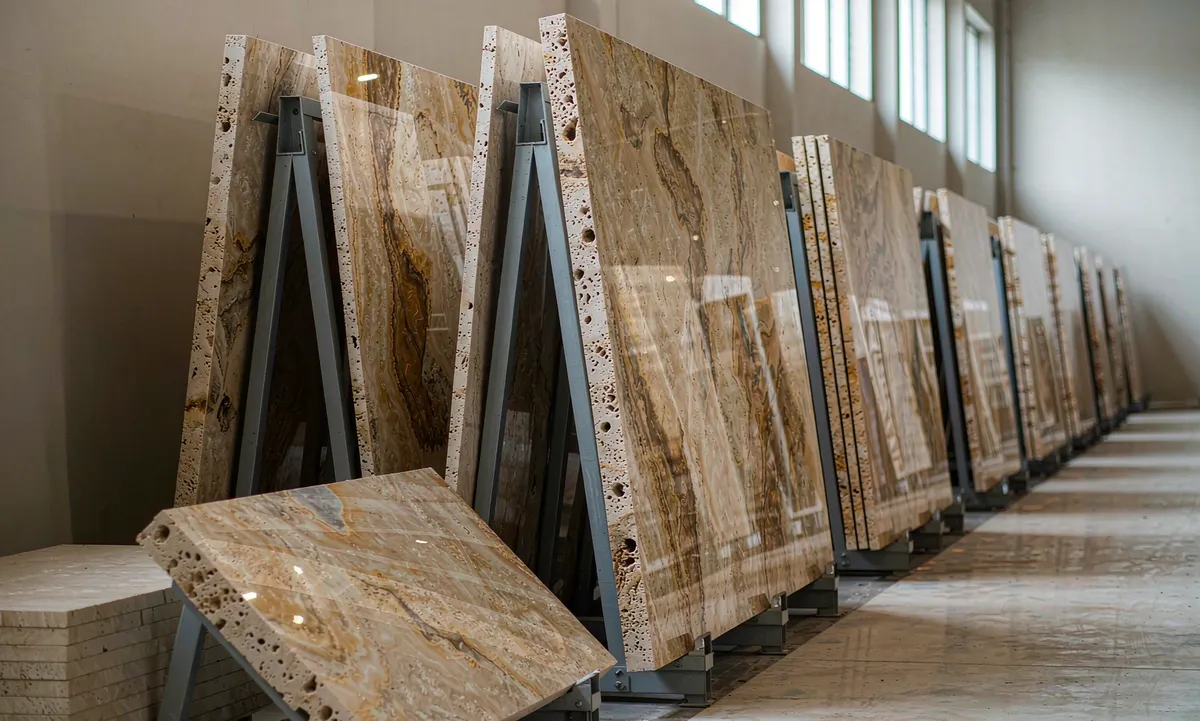
Travertine is a calcium carbonate stone deposited by mineral-rich spring water. As the water flows and CO2 escapes, calcite precipitates in layers, and gases trapped in the process leave behind the holes and channels that give travertine its distinctive texture. Those voids are not damage — they are the geology itself, and they fall into three broad types:
Because the void network affects density and water absorption, reputable suppliers test and report these properties rather than describing them adjectivally. ASTM C97 (absorption and bulk specific gravity) and the limestone dimension stone standard ASTM C568, under which travertine is commonly specified, give purchasing teams comparable numbers between batches and suppliers instead of marketing descriptions.
Filled travertine has its surface voids closed with a filler applied at the factory before final honing or polishing. Fillers are either cementitious (matching the stone's tone) or transparent resin, which lets the natural color of the void interior show through. Once filled and honed, the surface reads as continuous — joints between tiles become the only visible lines, and the floor cleans like a solid limestone surface. This is the standard specification for interior floors, vanity tops, and wall cladding in hotels and residential projects.
Unfilled travertine leaves the voids open. The face is typically honed, brushed, or tumbled, and the tactile texture is the point: the surface catches light and shadow and feels genuinely stone-like underfoot. Unfilled material is the traditional choice for exterior paving, pool surrounds, rustic interior floors, and feature walls where the open texture is part of the design.
The filling decision and the finish decision are coupled in practice. A polished surface must be filled — open voids cannot take a polish and read as black pits under gloss. A tumbled or brushed surface is almost always left unfilled, because filling would erase the texture the finish exists to create. Honed travertine is the crossover point, available both filled and unfilled, and it is exactly there that specifiers most often need to make a conscious choice rather than accept whatever the catalog defaults to.
Before filling is even discussed, the sawing direction has already changed the stone's appearance:
Cut direction also changes how filling reads. On a vein cut, fill sits inside parallel bands and the eye follows the lines, so a good fill is almost invisible. On a cross cut, fill patches interrupt a cloudy pattern, and tone matching between filler and stone becomes more critical. When approving slabs, review both faces of the same block: many projects vein cut the field tiles and cross cut feature elements from the same quarry lot, which keeps the palette identical while differentiating the areas.
| Application | Recommended spec | Why |
|---|---|---|
| Hotel lobby / interior floors | Filled, honed | Continuous surface, even wear, easy daily cleaning |
| Residential interior floors | Filled, honed | Comfortable underfoot, no dirt traps |
| Bathroom and vanity walls | Filled, honed or polished | Clean joints, water sheds off the face |
| Shower floors (small format) | Filled, honed | Open voids hold soap and body oils in wet zones |
| Kitchen backsplash | Filled or unfilled, per design | Vertical, low-abrasion zone |
| Countertops | Filled, honed | Calcium-based stone — specify sealed, expect etch patina (see FAQ) |
| Exterior wall cladding | Unfilled, honed or brushed | Open texture reads well at distance; ventilated detailing |
| Pool coping and surrounds | Unfilled, tumbled or brushed | Natural grip; voids improve wet traction |
| Exterior paving (mild climate) | Unfilled, tumbled | Freeze-thaw performance must be verified for the quarry lot |
| Stairs and treads | Filled, honed, with anti-slip grooves | Edge integrity and safe egress |
The pattern is consistent: filled stone wherever the surface must clean like a solid floor and stay hygienic; unfilled stone wherever texture, grip, or exterior weathering is the design intent.
Unfilled does not mean unspecified. Three points deserve explicit language in the purchase order:
One more specifier-relevant fact: travertine is nearly pure calcium carbonate and contains very little crystalline silica compared with siliceous stones such as granite and quartzite. Fabricators cutting and polishing travertine therefore face a lower respirable crystalline silica exposure than when working engineered quartz — a point worth noting in fabrication planning and site safety documentation, alongside the controls recommended in guidance such as Safe Work Australia's material on engineered stone and silica dust.
Filling is a factory process, so filling quality is a factory QC question. Before approving a travertine order for shipment, check:
Travertine tolerances are generous, but project logistics are not. Practical rules that keep installations clean:
Travertine is a calcium stone: it etches on contact with acids. Maintenance specification is therefore simple and non-negotiable — neutral pH cleaners only, no vinegar, no citrus-based or acidic descaling products, particularly in bathrooms where limescale removers are the default habits of housekeeping staff. Small pinholes that open with wear on filled floors can be spot-refilled with color-matched filler during routine maintenance cycles rather than treated as a defect claim. A penetrating sealer refreshed on the schedule the product manufacturer states — typically annually in wet and high-traffic areas — keeps the surface performing as specified on day one.
For interior floors in hotels, residences, and commercial buildings, filled honed travertine is the standard answer: the continuous surface cleans evenly and wears uniformly. Unfilled travertine suits floors where a rustic, textured patina is the design intent and the cleaning regime is planned around it.
Factory-applied filler on properly cured, honed material is stable for normal interior use. Light spot-refilling of occasional pinholes that open with wear is routine maintenance, not a failure. If filler lifts across a whole batch, that is a factory QC issue and should be caught at pre-shipment inspection.
On bathroom walls, yes — unfilled travertine cladding is a popular feature treatment. On shower floors and wet horizontal surfaces, filled stone is preferred: open voids trap soap, oils, and moisture in exactly the zone that is hardest to clean.
Finish drives slip behavior, not the filling. Polished travertine is slippery when wet and belongs on walls and dry interior floors. Tumbled and brushed unfilled travertine provides natural grip, which is why it is the usual choice for pool coping and exterior paving. For public projects, specify the surface against the relevant slip-resistance test for your market rather than relying on generic descriptions.
Both are calcium-based stones that etch with acid, but travertine's voided structure makes it lighter in appearance and generally more tolerant of a patina, while marble offers denser, glossier surfaces. The honest framing for clients: travertine trades some surface refinement for texture and warmth, and rewards a specification that respects its porosity.
Pricing tracks color, density, and selection far more than the filling itself — premium white and light vein travertine commands its price from rarity of the quarry lot, not from whether the voids are closed. Treat filling as an application decision and source the stone on its tested properties.
YDL Stone supplies travertine, limestone, onyx, and quartzite in blocks, slabs, and cut-to-size tiles for hotel and residential projects worldwide — with filled and unfilled, vein cut and cross cut material produced to the tolerances and finish schedule your drawings call for, supported by factory QC reports, batch-matched production photographs, and export crating planned around your site sequence. Send us your drawings or a material schedule, and our team will quote the specification — filled, unfilled, or both — with honest guidance on where each belongs.